The Subversive Power of a Rock Anthem and a Public Nod
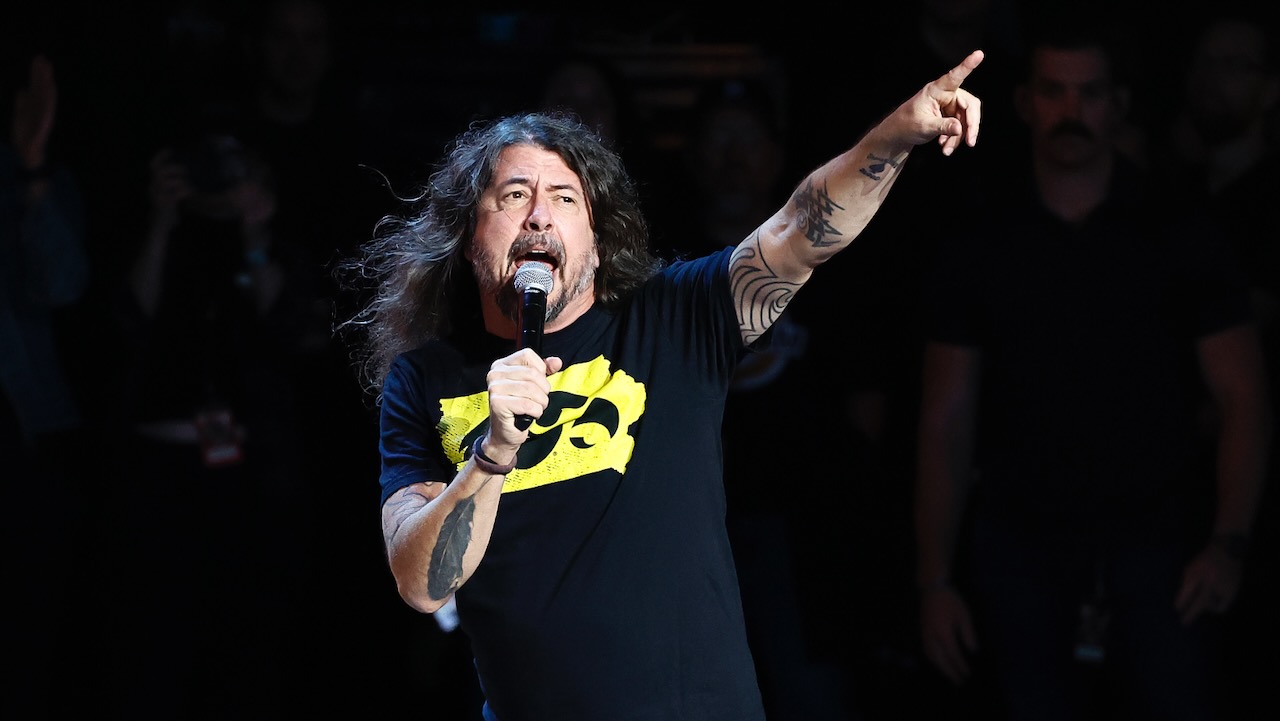
When Dave Grohl stepped onto the stage at the Power to the People Festival, most people in attendance probably expected a masterclass in arena-rock nostalgia. What they actually got was a masterclass in modern cultural signaling. Personally, I think moments like this remind us that rock and roll has never truly lost its teeth—it has just adapted its weapons.
What makes this particular performance so fascinating is how a single song dedication can turn a routine music festival into a living, breathing political tableau. When Grohl quietly sent a performance of "My Hero" out to his "new friend Jack," the internet didn't just buzz; it hummed with the electric realization that cultural figures are increasingly willing to use their platform as a subtle form of resistance. In my opinion, this isn't about partisanship in the traditional sense; it is about a deeper cultural friction happening right now in plain sight.
The Sartorial Satire of Modern Politics
A detail that I find especially interesting is Grohl's choice of attire. Wearing an Iowa Hawkeyes T-shirt isn't just casual festival wear—it was a razor-sharp, tongue-in-cheek nod to one of the most absurd recent moments in congressional theater, where a senator famously fumbled a basic sports team mix-up while trying to trip up former special counsel Jack Smith.
- The Weaponization of Pop Culture: Politicians try to use pop culture to look cool, but musicians use niche political blunders to create instant, shared cultural inside jokes.
- The Death of Subtlety: We live in an era where a t-shirt communicates an entire geopolitical critique faster than a thousand-word editorial.
- The Intersection of Law and Lyrics: Pairing high-stakes legal drama with sweaty festival rock creates a surreal mirror of our current political anxiety.
What many people don't realize is that this kind of low-key trolling requires a high degree of cultural literacy. If you take a step back and think about it, Grohl is bridging the gap between C-SPAN hearings and festival mosh pits. This raises a deeper question: have we reached a point where political subversion is best communicated through memes and merch rather than manifestos? From my perspective, absolutely.
Nostalgia as a Vehicle for Public Rescue
Elsewhere in the set, Grohl’s reflections on his time campaigning with John Kerry and his tribute to his mother painted a picture of a very different America. He talked about small towns in the Midwest and folks who were "in need of rescue." A detail that stands out to me here is how Grohl views the relationship between a public figure and an audience not as a performance, but as a rescue mission.
What this really suggests is that beneath the bombast of stadium rock, Grohl remains fundamentally obsessed with community and empathy. In my experience watching cultural icons age, they either retreat into cynical isolation or lean heavily into populist nostalgia. Grohl chooses the latter, but with an acute awareness of what ordinary public school teachers and everyday fighters go through.
The Ultimate Cultural Takeaway
When you look at the broader picture—combining surprise guest appearances with Morello, blistering covers of classic anthems, and pointed winks to high-profile prosecutors—you realize rock music is still functioning as a thermometer for the national mood. Personally, I believe we underestimate how deeply these symbolic gestures matter. They give people permission to laugh at the absurdity of our political climate while holding onto a shared sense of humanity. At the end of the day, it is not just about who is in the crowd; it is about who we choose to cheer for when the amplifiers finally turn down.