When Rock Royalty Collides: The Chaotic Magic of Live Collaboration
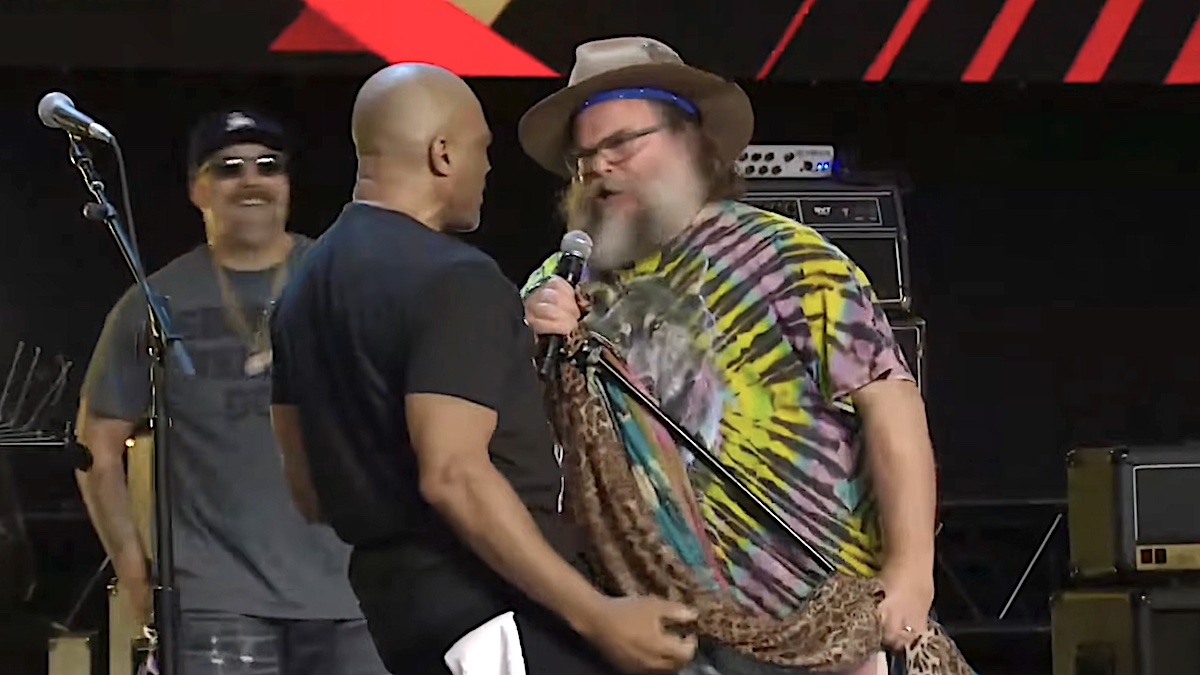
There is something wonderfully absurd and exhilarating about live music when it completely drops all boundaries. Personally, I think we live in an era that is far too obsessed with polished perfection, curated playlists, and sterile, algorithm-driven studio tracks. That is why moments like Tom Morello’s recent Power to the People festival at the Merriweather Pavilion in Maryland hit so differently. When you see figures like Jack Black, DMC, Tom Morello, Chuck D, Scott Ian, and members of Cypress Hill sharing a single stage to tackle a cross-genre monster like Aerosmith’s "Walk This Way," it forces you to remember what live performance was always meant to be: a celebration of pure, unadulterated chaos and collective joy.
What makes this particular gathering so fascinating is how effortlessly it bridges generations and subgenres that were once thought to be miles apart. In my opinion, music history is usually taught as a series of neat little boxes—classic rock here, hip-hop there, metal over in the corner. But reality has never cared about those rigid categorizations. When you watch Jack Black channeling Steven Tyler with a scarf-adorned mic stand while hip-hop pioneers like DMC trade bars with rock icons, you realize that the underground creative community has always operated like a giant, chaotic treehouse. What many people don't realize is that these crossover experiments aren't just novelty acts for nostalgia's sake; they are living proof that musical rebellion shares a common DNA, regardless of whether you're wielding a guitar or spinning a turntable.
The Generational Torch-Passing and the Joy of Playing Pretend
A detail that I find especially interesting from this festival wasn't even the headliner collaborations, but rather the side projects that bubbled up underneath them. Take Jack Black teaming up with a couple of rock offspring—Tom Morello’s son Roman and Scott Ian’s son Revel—to form "Jack Sabbath," eventually joined by actual Black Sabbath bassist Geezer Butler for a crushing rendition of "War Pigs." If you take a step back and think about it, there is something deeply wholesome and meta about this. Here you have veteran musicians letting their kids share the spotlight, while a comedian-turned-rock-frontman treats heavy metal royalty with the absolute highest degree of joyous reverence.
From my perspective, this dynamic highlights a major shift in how we view rock culture today. We’ve moved away from the self-serious, brooding rockstar archetype of the 70s and 90s into an era where reverence and humor can happily coexist. Jack Black embodies this shift better than almost anyone else alive. He treats rock and roll not as a religion that requires strict orthodoxy, but as an amusement park ride that everyone should jump on. When people look at a project like Jack Sabbath, they often dismiss it as a gimmick. But what this really suggests is a profound passing of the torch—not through formal mentorship, but through the shared, sweaty ecstasy of playing loud music in front of a live crowd.
Why Cross-Genre Mashups Still Matter in a Fragmented World
Let’s be honest: the original 1986 collision of Aerosmith and Run-D.M.C. changed the trajectory of modern music forever by proving that rock and rap could share a zip code. But watching a modern supergroup recreate that spirit at a festival curated by an activist-guitarist like Tom Morello takes on an entirely different political and cultural weight. What this tells us about the current cultural landscape is that tribalism is exhausting. Audiences are tired of being told they have to pick a lane.
If you ask me, the reason these massive, kitchen-sink live collaborations resonate so deeply is because they offer a brief antidote to cultural atomization. Nowadays, algorithms love to trap us in our own little customized echo chambers, feeding us only the exact subgenres we already know we like. A festival like Power to the People acts as a sledgehammer to those algorithmic walls. It reminds us that artistic communities are strongest when they collide, overlap, and surprise one another.
Ultimately, what I take away from this spectacle isn't just a sense of warm-and-fuzzy nostalgia. It’s a reminder that culture is a living, breathing conversation. Whether it's middle-aged rock legends trading verses with hip-hop pioneers or teenagers sharing a stage with their fathers' idols, the magic happens in the unexpected friction. In a world that desperately tries to keep everything neatly organized, a little bit of beautiful, loud confusion is exactly what we need.