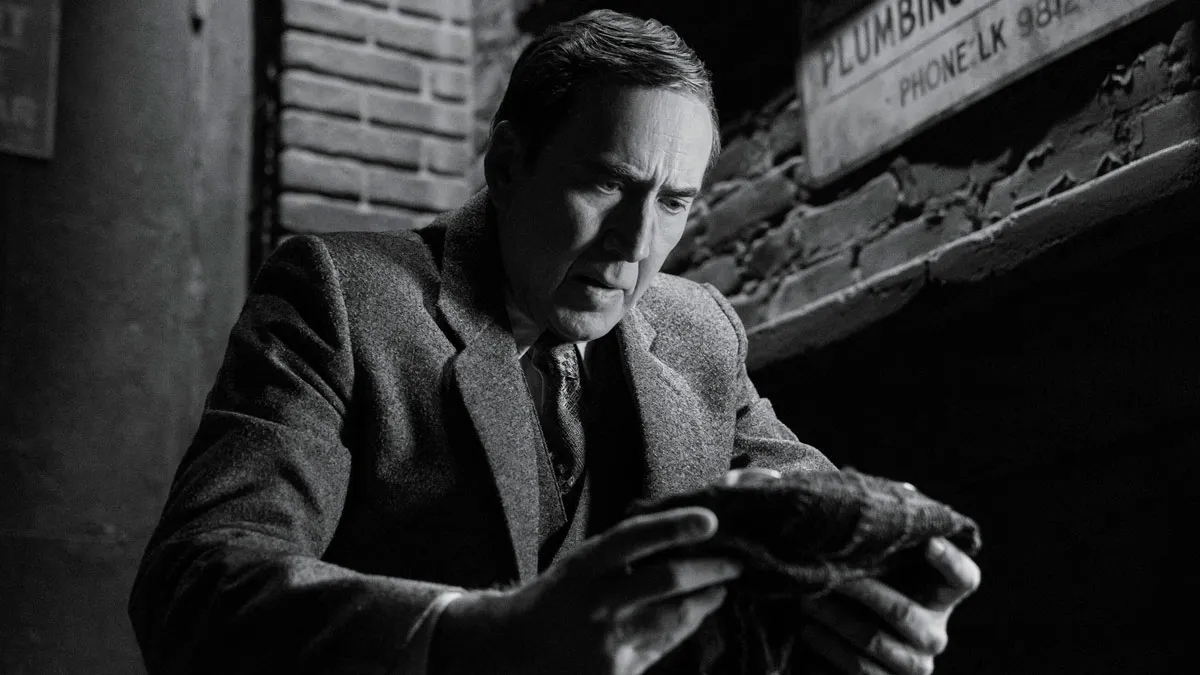
There is a fascinating and terrifying kind of integrity in watching someone simply draw a hard line in the sand while millions of dollars hang in the balance. When news broke that Nicolas Cage flat-out refused to sign an AI waiver for his acclaimed Amazon series Spider-Noir, it felt less like a standard Hollywood dispute and more like a pivotal cultural skirmish. Personally, I think this moment matters far beyond the streaming wars or comic book lore. It exposes a raw, uncomfortable truth about where the entertainment industry—and perhaps our entire digital economy—is careening.
The Cost of Refusing the Machine
What makes this particularly fascinating is how quickly a massive hit show can vanish when corporate ambition clashes with human stubbornness. Spider-Noir wasn't some hidden indie project that failed to find an audience; it pulled in billions of minutes of viewership and racked up Emmy wins that most networks would kill for. Yet, Amazon pulled the plug after just one season. If you take a step back and think about it, the math here is chillingly transparent. When a studio is pouring billions into AI infrastructure like OpenAI, a human actor demanding ownership of their own likeness and performance isn't just an inconvenience—they are an obstacle to a frictionless, automated future.
From my perspective, Cage's blunt admission at New York Comic Con—connecting his lack of an AI waiver to the show's sudden cancellation—highlights a massive power dynamic shift. What many people don't realize is that modern studio contracts are increasingly slipping these digital replication clauses in as standard boilerplate. Actors are expected to trade away their essence for a quick payout, signing away the right for algorithms to synthesize, clone, or manipulate their performances indefinitely. Cage's refusal wasn't just about one show; it was an act of ideological preservation. He is essentially saying that his face, his voice, and his art belong to him, not to a server farm in Oregon.
The Illusion of Prestige TV in the Age of Automation
One thing that immediately stands out to me is the sheer hypocrisy of contemporary prestige television. Studios will throw historic budgets at creative talent, market them as visionary auteurs, and then quietly demand the right to digitize and replace them when it's economically convenient. A detail that I find especially interesting is how Spider-Noir was universally praised precisely for its grit, its human texture, and Cage's intensely physical, idiosyncratic commitment to the role. You cannot algorithmically generate that kind of lived-in eccentricity—or at least, you couldn't without flattening it into a sterile product.
This raises a deeper question about what we are actually paying for when we consume art. If audiences fall in love with a performance, do they care if it was sculpted by a human soul or optimized by a machine learning model? Personally, I believe we are hurtling toward a massive cultural reckoning regarding authenticity. When studios prioritize scalable, automated content creation over human friction, they risk hollowing out the very magic that made storytelling valuable in the first place. Cage walking away from Amazon to pivot straight to HBO's True Detective suggests that genuine talent will always find a refuge—at least for now—where human messiness is still considered a feature rather than a bug.
Looking Beyond the Streaming Graveyard
What this whole saga really suggests is that the battle lines of the next decade won't be fought over creative differences or salary disputes, but over ontology itself: what it means to be a creator in a world that wants to digitize humanity out of the equation. We love to romanticize rebels in cinema, but seeing an actor actually put their career on the line to block the corporate assimilation of their craft is rare. Amazon can write off a multi-Emmy-winning series and move on to its next tech-adjacent venture, but Nicolas Cage has reminded everyone that some things still cannot—and should not—be automated.